
Endometriosis
A chronic gynaecological condition where endometrial tissue grows outside the uterus, causing pain, heavy periods and sometimes infertility.
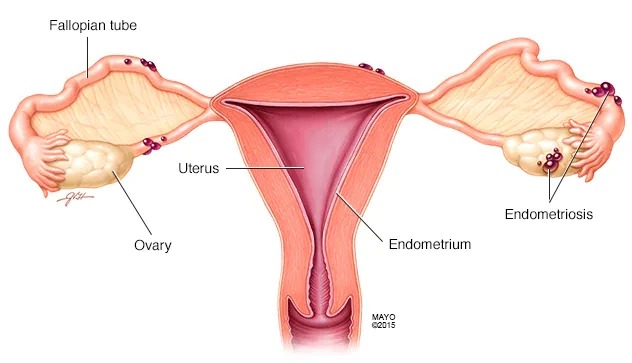
Introduction
A common condition affecting 5–10% of women, often presenting with severe pain, heavy bleeding and fertility issues.
Endometriosis is a disorder in which endometrial tissue (the lining of the uterus) grows outside the uterus — commonly on the ovaries, fallopian tubes, intestines and pelvic lining.
These tissues still behave like normal endometrium: they thicken, break down and bleed with each menstrual cycle. But since this blood has no natural passage to exit the body, it causes inflammation, pain, cysts and adhesions (organs sticking together).
Symptoms can range from mild to very severe and may include infertility. At Maa Nursing Home and NetraJyoti Eyecare Centre, endometriosis is treated with medicines and, in severe cases, laparoscopic surgery.
Symptoms of Endometriosis
- Pelvic pain (often worsening during periods)
- Heavy or prolonged menstrual bleeding with small or large blood clots
- Premenstrual spotting
- Pain radiating to thighs and legs
- Infertility
- Chronic fatigue
- Constipation or diarrhoea
- Bloating and pain while passing motions
- Occasional fever and headache
- Depression and anxiety due to chronic pain
What Causes Endometriosis?
The exact cause is unknown, but several theories exist:
- Retrograde menstruation: Menstrual blood containing endometrial cells flows backwards through the fallopian tubes into the pelvis, where cells implant and grow.
- Coelomic metaplasia: Primitive cells lining the pelvic organs may transform into endometrial-like tissue.
- Transplantation during surgery: Direct transfer of endometrial tissue to scars (e.g. Caesarean or episiotomy scars).
- Spread via blood or lymph: Explains rare endometriosis in distant organs such as the brain or lungs.
- Immune system changes: Altered immunity may fail to recognise and remove misplaced endometrial tissue.
Treatment Options
Treatment depends on symptom severity, age and fertility wishes. At our centre, we offer:
Medical Management
- Pain-relief medicines to control pelvic pain and cramps.
- Hormone-suppressing drugs (oral or injections) to reduce or stop the cyclical activity of endometrial implants, relieve pain and slow disease progression.
- These medicines may also help reduce the risk of ectopic pregnancy in selected patients.
Surgical Management
In severe cases, especially where pain is uncontrolled or infertility is present, laparoscopic surgery may be advised.
- Removal of endometriotic implants
- Resection of adhesions (separating organs and tissues stuck together)
- Restoration of normal pelvic anatomy and function
Laparoscopy offers better visualisation, smaller incisions, faster recovery and improved chances of pregnancy when endometriosis is a cause of infertility.
Why Choose Us for Endometriosis Care?
- Experienced gynaecology & infertility team
- Combined medical & laparoscopic approach
- Focus on pain relief and fertility preservation
- Personalised long-term management plans